
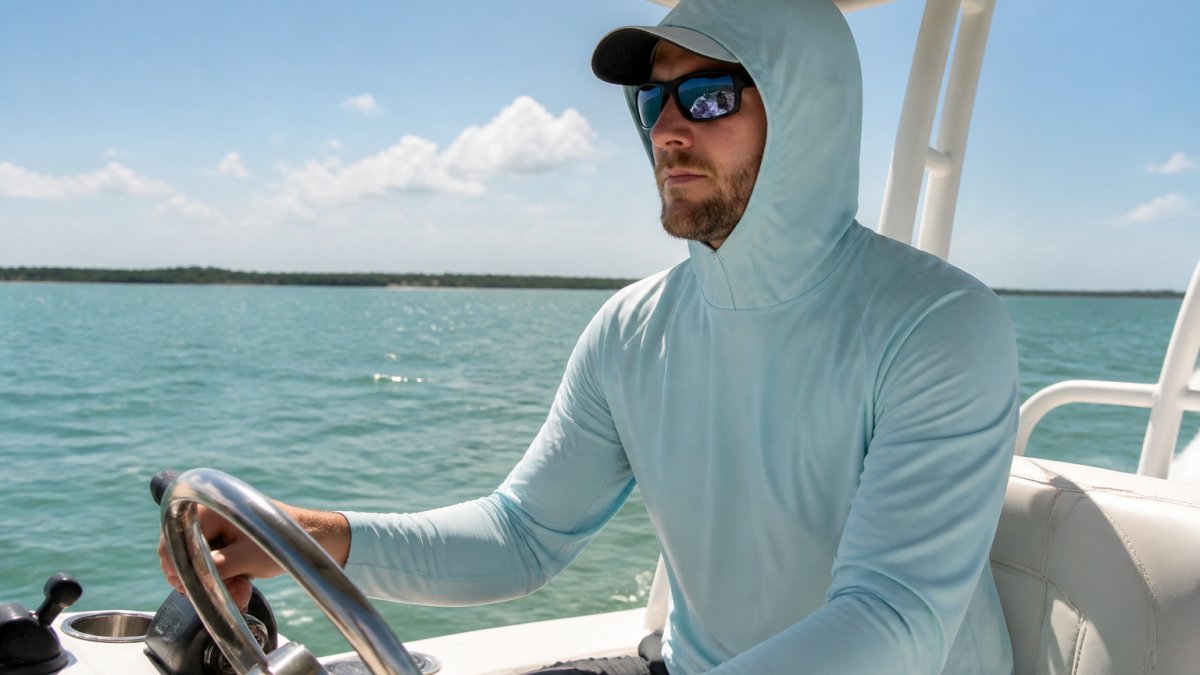
What Is a UPF 50 Fabric Rating? Sun Protection Explained
Table of Contents
- What Is a UPF 50 Fabric Rating?
- SPF vs UPF Clothing: What's the Difference?
- Factors That Affect UPF Protection: Weave, Color, Stretch, and Fiber
- How Long Does UPF Clothing Last?
- How to Wash UPF 50 Clothing Without Damaging Protection
- Testing Standards and Certification: How to Trust a UPF 50 Rating
- Frequently Asked Questions
Last Updated: September 28, 2026
What Is a UPF 50 Fabric Rating?
A UPF 50 fabric rating means the material blocks at least 98% of ultraviolet radiation from reaching your skin. UPF stands for Ultraviolet Protection Factor, a laboratory-measured standard for how much UV radiation passes through fabric to your skin. The "50" represents the minimum protection threshold; UPF 50+ indicates even greater blocking capacity. At Saltline Gear, we build our sun hoodies to meet this standard because sun exposure accumulates over a lifetime, and clothing is the most consistent defense you have.
How UPF Protection Works
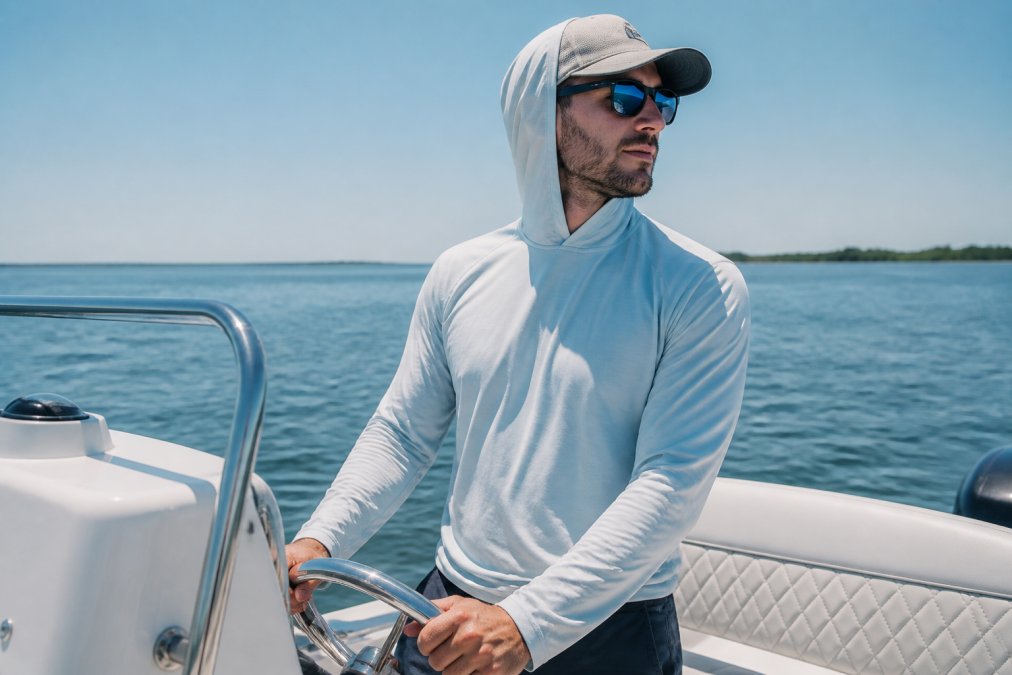
Textiles block UV radiation through two mechanisms: physical structure and chemical treatment. Dense fabric weave creates a barrier that scatters and absorbs UV rays before they penetrate. Synthetic fibers like polyester and nylon naturally absorb UV radiation more effectively than loose-knit cotton. Some fabrics receive chemical treatments that enhance their UV-blocking capacity. The tighter the weave density and the more UV-absorbing the fiber composition, the higher the UPF rating.
UVA vs. UVB Radiation Explained
Ultraviolet A (UVA) penetrates deeper into skin layers, contributing to premature aging and skin damage over time. Ultraviolet B (UVB) primarily affects surface skin layers and is the main cause of sunburn. Both contribute to skin cancer risk. A quality UPF 50 fabric blocks both types of solar radiation, providing broad-spectrum protection that sunscreen alone often struggles to maintain during extended outdoor activity.
SPF vs UPF Clothing: What's the Difference?
SPF and UPF measure protection differently. SPF (Sun Protection Factor) applies to sunscreen and measures how long skin takes to burn with product applied versus without. UPF applies to fabric and measures how much UV radiation transmits through the material. They are not interchangeable metrics.
Why UPF Ratings Are More Reliable Than SPF for Fabric
Sunscreen requires reapplication every two hours, more often when swimming or sweating (the WHO). Fabric does not. For boaters, golfers, and anyone spending long hours outdoors, this consistency matters. The Skin Cancer Foundation's sun protection guidance emphasizes that sun-protective clothing offers reliable, consistent coverage that doesn't wash off or wear away during activity.
Factors That Affect UPF Protection: Weave, Color, Stretch, and Fiber
Fabric construction determines actual protection levels. A UPF 50 rating reflects laboratory testing of specific conditions, but real-world factors shift performance:
- Weave density: Tighter weaves block more UV radiation. Open knits allow more penetration.
- Color: Darker colors absorb more UV radiation than lighter shades.
- Stretch: Fabric stretched tight loses protection because gaps in the weave widen.
- Fiber composition: Polyester and nylon outperform cotton and rayon for UV-blocking.
- Moisture: Wet fabric can lose protection depending on fiber type, though some synthetics maintain or improve when damp.
Fabric Composition Comparison: Natural vs. Synthetic
| Fiber Type | UV Blocking | Moisture Behavior | Durability |
|---|---|---|---|
| Polyester | Excellent | Maintains when wet | High |
| Nylon | Very good | Slight loss when wet | High |
| Cotton | Moderate | Loses protection when wet | Moderate |
| Bamboo/rayon | Low to moderate | Variable | Lower |
| Wool | Moderate | Maintains when wet | High |
Synthetic fibers generally outperform natural fibers for sun protection because their molecular structure absorbs UV radiation more efficiently. This is why most technical sun-protective apparel uses polyester or nylon blends.
How Long Does UPF Clothing Last?
Most UPF clothing is designed to maintain its rated protection for the life of the garment, but "life of the garment" is doing a lot of work in that sentence, and it assumes you care for the fabric correctly. Unlike sunscreen, UPF protection doesn't expire on a printed date. Instead, it degrades along two separate tracks: mechanical shielding (the tight weave and UV-absorbing fibers) and chemical treatments (applied finishes that boost protection).
The Two Ways UPF Fades
Mechanical degradation happens when the fabric structure itself changes. Stretching widens the gaps between yarns, letting more UV through. Abrasion thins the fabric. Repeated washing and drying can relax the weave. Because the protection is built into the fiber and construction, it fades gradually and predictably, a well-made mechanical UPF garment typically holds most of its protection for years.
What Accelerates the Decline
A common pattern is that protection drops fastest when several of these stack up:
- Stretching: A snug fit that becomes tighter over time opens the weave.
- Fabric softener and dryer sheets: These coat fibers and can reduce UV-blocking ability.
- Hot water and high-heat drying: Heat stresses fibers and can degrade chemical finishes.
- Bleach and harsh detergents: They break down both fibers and treatments.
- Abrasion: Backpacks, harnesses, and repeated friction thin high-wear areas.
- Sun exposure itself: UV radiation degrades many textile finishes over time.
Signs Your UPF Garment Needs Replacing
Watch for these indicators that protection has diminished:
- Fabric appears thin or worn when held to light.
- The garment has stretched significantly from its original fit.
- Pilling or fraying is visible on high-exposure areas.
- The fabric feels noticeably different after repeated washing.
- Color has faded dramatically.
The Practical Takeaway
If you buy a mechanically constructed UPF 50+ garment and care for it as directed, you can reasonably expect it to protect you for the life of the fabric, often several seasons of regular use. If you buy a chemically treated garment, treat the rating as something that needs to be preserved rather than assumed. Either way, the label tells you the starting point, not the finish line.
How to Wash UPF 50 Clothing Without Damaging Protection
Machine washing UPF 50 clothing on a gentle cycle with cold water preserves the fabric's protective qualities. Avoid hot water, harsh detergents, and fabric softeners, which break down fibers and chemical treatments that contribute to UV blocking.
Step-by-Step Care Tips
- Turn garments inside out before washing
- Use cold water on a gentle or delicate cycle
- Add a mild, liquid detergent (no bleach, no fabric softener)
- Skip the dryer; hang dry in shade to prevent UV degradation of the fabric itself
- Avoid ironing, which can damage fiber structure
- Store folded rather than hung to prevent stretching
Testing Standards and Certification: How to Trust a UPF 50 Rating
A legitimate UPF 50 rating comes from standardized laboratory testing, not marketing claims. The FTC's guidance on textile labeling requires that UPF claims be substantiated through recognized testing methods, which means a brand cannot legally print "UPF 50" on a hangtag without data behind it.
What the Test Actually Measures
The core method in the United States is AATCC 183, formally titled Transmittance or Blocking of Erythemal Ultraviolet Radiation Through Fabrics. In practice, a spectrophotometer shines UV radiation across the ultraviolet spectrum, typically from 290 to 400 nanometers, through a fabric sample and measures how much passes through at each wavelength. Those transmission values are then weighted against the erythemal action spectrum, a curve that reflects how efficiently each wavelength causes sunburn.
- AS/NZS 4399, the Australian/New Zealand standard, which pioneered UPF labeling and requires testing on new, dry, unstretched fabric.
- EN 13758-1, the European standard, which also specifies conditioning and measurement procedures.
- AATCC 183, the U.S. method referenced by most domestic brands and by the FTC when evaluating claims.
How a Fabric Earns the "50"
Ratings are assigned in bands, not as precise promises. A fabric tested at UPF 50 blocks roughly 98% of UV radiation; UPF 50+ indicates the test result exceeded the scale's ceiling, which is why you often see it on technical sun apparel. The bands exist because fabric performance varies slightly across samples, colors, and production runs, a single number would overstate precision.
What the Label Doesn't Tell You
A UPF rating is measured under specific conditions: typically new, dry, and unstretched fabric. That means the number on the tag describes the garment at its best, not after a season of wear. Two garments can both say "UPF 50" while behaving very differently once they're wet, stretched, or washed repeatedly, which is why care instructions and fabric construction matter as much as the rating itself.
How to Verify a UPF Claim
When evaluating sun-protective clothing, look for:
- A specific rating stated on the label (UPF 50 or UPF 50+), not vague language like "sun protective."
- Reference to the testing standard used (AATCC 183, AS/NZS 4399, or EN 13758-1).
- Third-party certification or independent lab verification when available.
- Care instructions that acknowledge how protection can be preserved.
Saltline Gear tests our fabrics to recognized standards so the UPF 50+ rating on our sun hoodies reflects verified performance, not guesswork. If a brand cannot tell you how its rating was determined, or which standard it was tested against, treat that rating with skepticism.
Frequently Asked Questions
Is UPF 50 clothing worth it compared to regular shirts?
Yes, UPF 50 clothing offers reliable, consistent protection that regular shirts often lack. A standard white cotton t-shirt typically provides only UPF 5 to UPF 10, blocking just 20% of UV rays. UPF 50 fabric blocks 98% of UV radiation, including both UVA and UVB. It also doesn't wash off or need reapplying like sunscreen. For long outdoor activities, UPF 50 clothing is a practical, skin-safe choice.
How long does UPF 50 clothing last before it loses effectiveness?
With proper care, UPF 50 clothing can maintain its protection for the life of the garment. Factors like chlorine, saltwater, rough washing, and stretching can speed up degradation. To extend lifespan, rinse after each use, wash cold on gentle, and air dry. Replace garments when the fabric becomes thin, stretched, or faded.
Does wet fabric affect the UPF 50 rating of a garment?
Generally, wet fabric can slightly reduce UPF protection because water fills the gaps between fibers, but the effect varies by fabric type. Some synthetic fabrics maintain or even improve UPF when wet because the fibers swell. However, stretching and repeated wetting can permanently lower UPF over time. For water sports, choose garments specifically designed for wet conditions and rinse with fresh water after use.
Can I wash UPF 50 clothing like normal laundry?
No, standard laundry practices can damage UPF protection. Avoid fabric softeners, bleach, and hot water, which break down fibers and treatments. Wash in cold water on a gentle cycle with mild detergent. Skip the dryer; air dry flat or hang. Following these steps preserves the fabric weave and any chemical treatments, keeping your UPF 50 rating effective for longer.


Leave a comment
This site is protected by hCaptcha and the hCaptcha Privacy Policy and Terms of Service apply.