
Article: UPF 50+ vs. SPF: What’s the Real Difference When You’re Out on the Water?
UPF 50+ vs. SPF: What’s the Real Difference When You’re Out on the Water?
UPF 50+ vs. SPF: What’s the Real Difference When You’re Out on the Water?
If you spend any time on a boat, a paddleboard, or walking the shoreline, you already know the routine: slather on lotion, wait for it to dry, and pray you didn’t miss the tops of your ears or the back of your neck.
Yet, after six hours on the water, you still end up feeling that familiar, tight heat on your skin.
You’ve probably seen sun shirts and rash guards tagged with UPF 50+ and wondered: Is that just marketing jargon for regular sunscreen, or does it actually work differently?
The short answer: They protect your skin in fundamentally different ways. And when you’re dealing with the intense reflection of open water, understanding the difference can save your skin from serious sun damage.
Here is the straightforward breakdown of UPF vs. SPF—and why technical sun gear has become essential for life on the coast.
1. The Core Difference: Fabric vs. Film
The easiest way to understand the two ratings comes down to what is doing the protecting:
-
SPF (Sun Protection Factor) measures how long a topical lotion or spray protects your skin from UVB rays—the specific rays responsible for surface sunburn.
-
UPF (Ultraviolet Protection Factor) measures how much ultraviolet radiation a fabric allows to pass through to your skin. Importantly, UPF measures both UVA and UVB rays.
Think of SPF as a chemical barrier that sits on your skin, while UPF is a physical shield that blocks the rays before they ever reach you.
2. The Open-Water Problem: The "Double Sun" Effect
Sun exposure on the water isn't the same as sun exposure in your backyard.
Water acts like a giant mirror. It reflects up to 20% to 25% of UV radiation directly back upward. When you're out on the flats or cruising offshore, you aren't just getting hit from above—you're getting hit from underneath your hat brim, off the boat deck, and across the surface of the chop.
Here is why sunscreen alone often fails in that environment:
-
The Wash-Off Factor: Even "water-resistant" sunscreens break down quickly when met with salt spray, sweat, and towel drying.
-
The "Blind Spot" Burn: The underside of your chin, the nape of your neck, and behind your ears get hit by bounced UV light. These are the exact spots most people miss when applying lotion.
-
The Grip Issue: If you are casting a line, tying knots, holding the helm, or paddling, greasy sunscreen hands ruin your grip and make a mess of your gear.
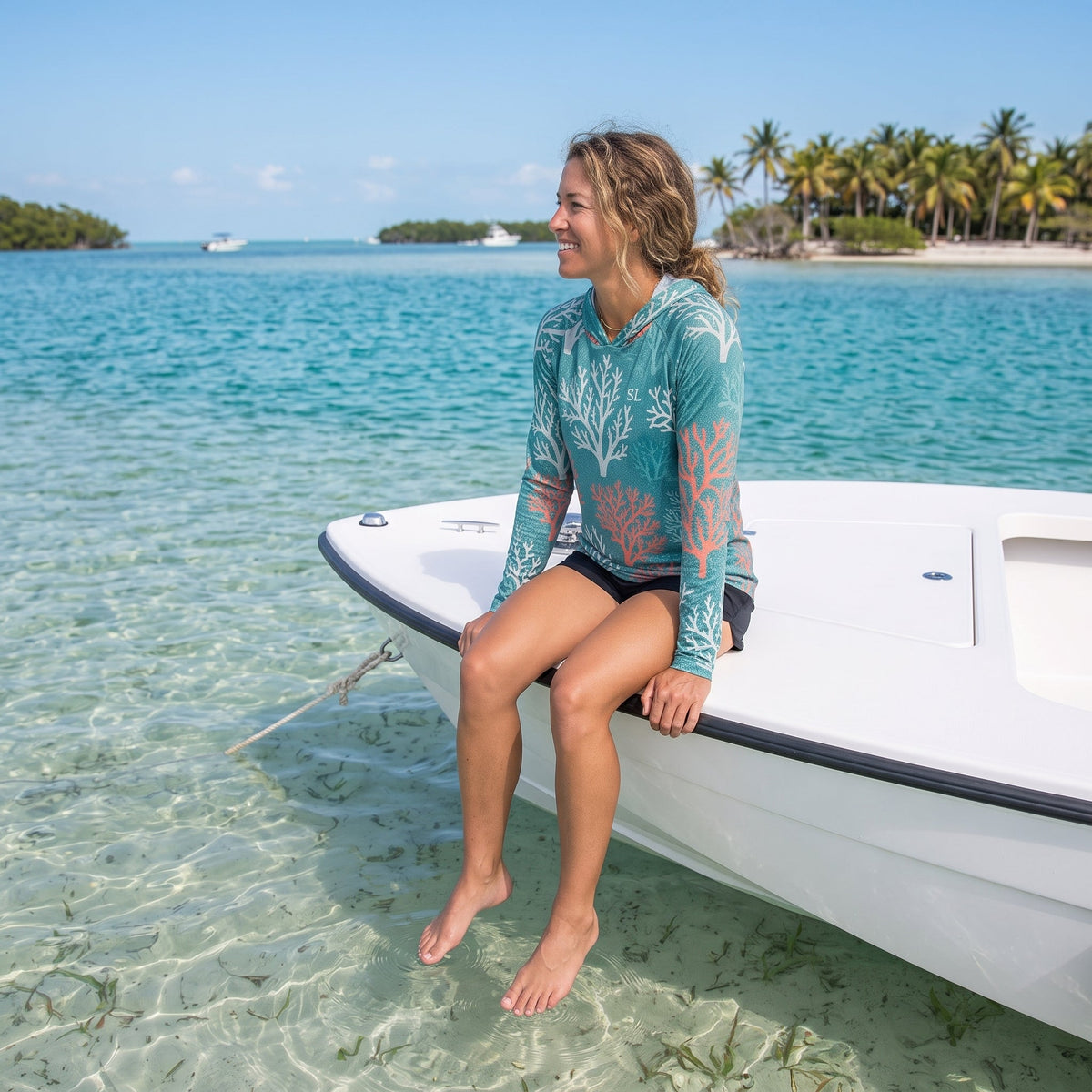
This is where a dedicated UPF 50+ sun hoodie completely changes the game. By pulling up a crossover hood and tucking your cap underneath, your neck, ears, and temples stay continuously shielded from both overhead and bounce-back glare—with zero reapplication.
3. Does a Regular Cotton T-Shirt Have UPF?
A common question we hear is: "Can't I just wear an old white cotton t-shirt?"
You can, but it might not be doing what you think.
A standard, dry white cotton tee only provides an estimated UPF of 5 to 7. That means roughly one-fifth of all UV rays are slicing right through the weave to your skin.
Worse yet, once that cotton shirt gets wet from spray or sweat, its protective rating can drop down to as low as UPF 3. Cotton fibers swell, pull apart, and become semi-translucent to UV light. Plus, wet cotton clings, stays damp for hours, and chills you as soon as the boat picks up speed.
A true UPF 50+ technical sun shirt, by contrast:
-
Blocks 98% or more of both UVA and UVB rays.
-
Uses a tight, micro-knit technical weave engineered to stop light penetration.
-
Dries in minutes while actively wicking moisture away to keep your core cool under direct midday heat.
4. How to Get the Best Protection on Your Next Boat Day
You don't have to throw your sunscreen away—in fact, you shouldn't. The most comfortable, sun-safe boaters use a hybrid approach:
-
Cover the Core with UPF 50+: Wear a lightweight, long-sleeve performance sun hoodie with thumbholes and an integrated hood. This takes care of 85% of your body without a single drop of lotion.
-
Use Mineral Sunscreen for the Gaps: Apply a reef-safe, water-resistant mineral block (zinc oxide based) solely to the small areas left exposed: your nose, cheeks, and lips.
-
Add Polarized Shades: Protect your eyes from the same water-surface reflection that burns your skin.
When you spend your day on the water shielded by breathable performance gear, you return to the dock feeling energized—not drained by the heat and fighting off sunburn.
Ready to Upgrade Your Sun Defense?
Explore our lineup of ultra-breathable, lightweight UPF 50+ Sun Hoodies designed with technical stretch, crossover hoods for full neck coverage, and coastal-inspired prints made for long days on the water.

Leave a comment
This site is protected by hCaptcha and the hCaptcha Privacy Policy and Terms of Service apply.