
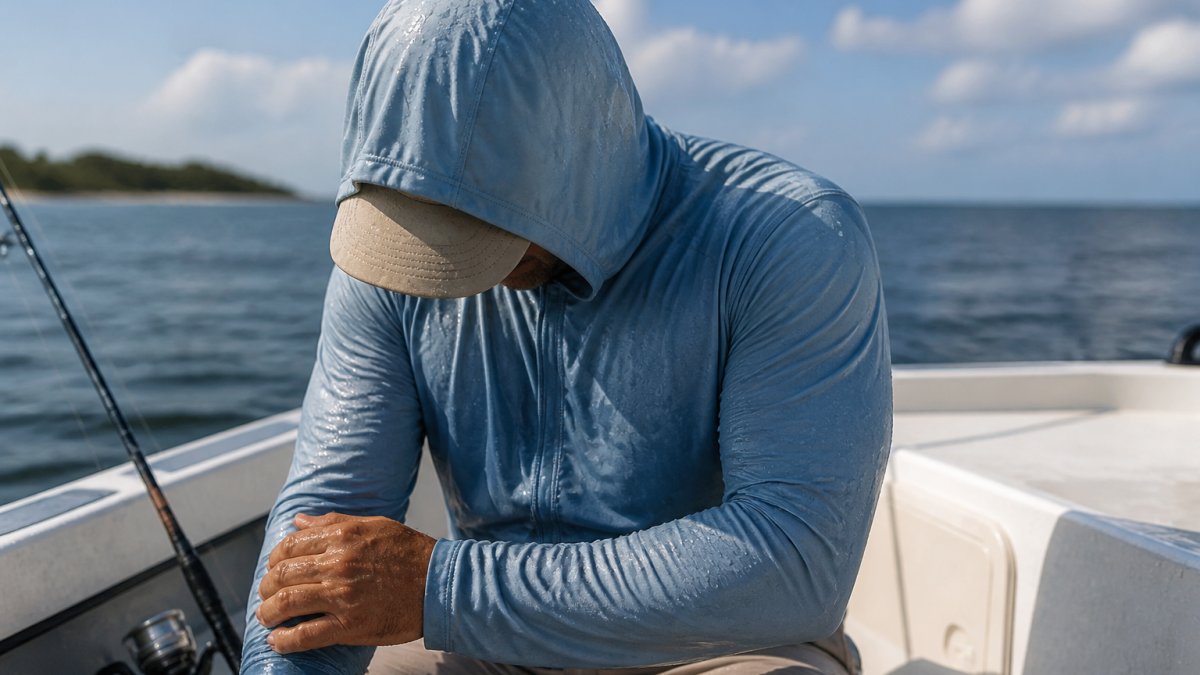
Does UPF Clothing Lose Effectiveness When Wet
Table of Contents
- Does UPF Clothing Lose Effectiveness When Wet
- How Moisture Changes UV Transmittance in Fabric
- Does UPF 50 Still Work When Wet
- Fabric Type and Fiber Matters: Cotton vs Synthetic
- How Long Does UPF Last in Clothing After Getting Wet
- Does UPF Wash Out of Clothing Over Time
- UPF Clothing vs Sunscreen: Which Offers Better Protection
- How to Maintain UPF Protection During Water Activities
- Frequently Asked Questions
Last Updated: October 5, 2026
Does UPF Clothing Lose Effectiveness When Wet
Yes, does UPF clothing lose effectiveness when wet, but not completely. Water makes fabric more transparent to UV radiation, so more rays pass through than when dry.
A soaked UPF 50 shirt might drop to UPF 10-15, depending on fabric, wetness, and weave tightness.
The key is knowing which fabrics hold up and how to maintain protection on the water.
How Moisture Changes UV Transmittance in Fabric
When water soaks into fabric, it fills the air gaps between fibers. Those air pockets normally scatter and block UV, but water scatters UV less effectively.
Ultraviolet transmittance is how much UV passes through a material.
Synthetics outperform natural fibers when wet: polyester and nylon absorb little water and retain more UV protection, while cotton soaks up moisture and loses protection fast.
Does UPF 50 Still Work When Wet
A UPF 50 rating means the fabric blocks about 98% of UV rays when dry and tested under standard conditions.
The practical takeaway: A wet UPF garment is still protective, but treat it as one layer of defense, not complete sun protection.

Fabric Type and Fiber Matters: Cotton vs Synthetic
Fabric type is the biggest variable in how much protection you lose when wet, bigger than wetness level in most cases, but the comparison is more nuanced than "synthetics good, cotton bad."
The mechanism, in one paragraph
Dry fabric blocks UV two ways: absorption by fibers (polyester and UV-blocking additives absorb strongly) and scattering at the fiber-air interfaces inside the weave.
Wet-vs-dry protection by fabric type
The numbers below are typical ranges from published fabric studies and manufacturer testing, not universal constants.
- Cotton (untreated, standard weave): loses the most. A dry UPF 50 cotton shirt can fall to UPF 5-15 when saturated, cotton absorbs lots of water, holds it in the fiber structure, dries slowly, and depends heavily on the air gaps water fills.
- Cotton with a UV-blocking finish: better dry, but the finish does the work and degrades with washing and pool exposure. Wet performance is still weaker than synthetics, and finish loss is permanent.
- Polyester: the strongest common performer when wet, it absorbs little water, dries fast, and absorbs UV natively. A dry UPF 50 polyester shirt commonly stays in the UPF 15-30 range when saturated.
Why the numbers vary so much
Two garments can both be labeled "UPF 50" and behave very differently when wet. The reasons:
- Weave tightness and weight. A 180 GSM tight-knit polyester and a 120 GSM loose-knit polyester are not the same product.
- Color and dyes. Darker colors generally absorb more UV; some dyes add measurable protection.
- Test method. Standard UPF testing (AATCC and AS/NZS protocols) is performed on dry, conditioned fabric unless the brand states otherwise, a "UPF 50" label doesn't tell you what the garment does when wet.
What this means in practice
- For water sports, fishing, and long sweaty days, polyester or a polyester-dominant blend is the most reliable choice.
- Cotton is fine for dry, low-exertion use, a dry cotton tee can be genuinely protective, but it's the wrong tool for a day on the water.
- Don't trust the UPF number alone. Check fiber content, weight, and whether the brand states anything about wet performance or test conditions.
Fabric type drives how much UPF protection you lose when wet. Polyester and engineered UV synthetics retain the most; untreated cotton loses the most; blends fall in between based on the dominant fiber. But weave, weight, fit, and test conditions all shift the numbers, so treat any single UPF figure as a starting point, not a guarantee.
How Long Does UPF Last in Clothing After Getting Wet
For most fabrics, the protection loss from moisture is temporary.
Why wetness is reversible (and what actually happens)
When water fills the air gaps between fibers, it changes how the fabric scatters and absorbs UV.
Rough drying timelines (real-world, not lab-controlled)
These are practical ranges, not guarantees, actual times depend on fabric weight (GSM), humidity, airflow, and sun or shade.
- Light splash / surface damp: protection largely returns within roughly 15-30 minutes of air drying in moving air.
- Damp throughout (sweat-soaked, light rain): roughly 30-90 minutes.
- Fully saturated (swimming, submersion, heavy soak): commonly 1-3 hours for a lightweight synthetic; longer for heavier knits or high humidity.
What does NOT recover
Drying restores moisture-related loss. It does not restore:
- Mechanical wear, abrasion, pilling, and weave thinning permanently reduce coverage.
- Stretch, a garment pulled tight across the shoulders or back has a more open weave there, and it stays that way while worn.
- Chemical finish degradation, UV-blocking treatments (common on cotton and some blends) wash out over time; once gone, they don't return with drying.
Fresh water vs. sweat vs. salt water
Most coverage lumps all wetness together, but the types behave differently:
- Fresh water (lake, river, rain): the simplest case, mostly a temporary optical effect.
- Sweat: contains salts, oils, and urea. It wets fabric unevenly and leaves residues that hold moisture longer, so the reduced-protection window lasts longer than a plain splash.
- Salt water: leaves salt crystals in the weave as it dries. Short term, dried salt can slightly increase scattering; over repeated cycles, salt residue plus abrasion accelerates fiber and finish breakdown. Rinse in fresh water after ocean use.
- Chlorinated pool water: the harshest for chemical finishes. Chlorine oxidizes many UV-blocking treatments, so pool exposure shortens a garment's effective lifespan faster than fresh or salt water.
How to tell whether your garment has recovered or degraded
Most people don't own a UV meter, but practical signals work:
- Hold it up to a bright light or the sun. If you can see more light through it than when it was new, coverage has permanently dropped.
- Compare the same spot wet vs. dry. If the wet spot looks dramatically brighter than the surrounding dry fabric, moisture is still active, wait for it to dry and re-check.
- Check the label. If the UPF rating came from a chemical finish (common on cotton and some blends), assume it declines with washes and pool exposure. If it came from weave and fiber (most technical synthetics), it's more durable but still degrades with mechanical wear.
- Track the age. Two to three seasons of regular water use is a reasonable horizon for a technical sun shirt; after that, treat it as a secondary layer.
Don't assume your UPF shirt is back to full protection just because the surface feels dry. Interior moisture, especially in thick knits, hoodies, and humid conditions, can keep UV transmittance elevated for another 30-60 minutes. If you've been submerged, keep sunscreen on exposed skin until the garment has had time to fully dry.

If you're on the water all day, you'll likely get re-splashed before the previous soak fully dries.
Moisture-related UPF loss is temporary and reverses as the fabric dries. Permanent loss comes from wear, stretch, and finish degradation, not from getting wet. Rinse salt and chlorine out after use, air dry when you can, and replace garments showing visible thinning or light transmission.
Does UPF Wash Out of Clothing Over Time
UPF protection degrades with repeated washing and wearing, but gradually.
Engineered UV-protective fabrics (chemical finishes or specialized fibers) typically retain 80-90% of their original UPF rating after 20-30 wash cycles.
Tightly woven synthetic fabrics (protection from the weave, not a finish) hold up better, maintaining 90%+ of protection through 50+ wash cycles.
Factors that accelerate UV protection loss:
- Hot water washing (use cold or warm)
- Bleach or harsh detergents (they degrade fibers)
- Chlorine from pools (breaks down UV-blocking finishes)
- Frequent drying in direct sunlight (degrades some finishes)
Saltline Gear recommends hand washing or gentle machine washing in cold water without bleach to preserve the fabric and its UV-protective properties.
UPF Clothing vs Sunscreen: Which Offers Better Protection
This isn't either-or, they work best together.
UPF clothing advantages:
- Consistent protection all day without reapplication
- Covers large areas of skin at once
- Doesn't wash off in water (though protection reduces when wet)
- No chemical absorption through skin
Sunscreen advantages:
- Covers areas clothing can't (face, hands, ears, neck gaps)
- Protects exposed skin directly
- Can be reapplied as needed
- Works in any condition (wet, dry, sweaty)
The practical reality: Use both. Wear UPF-rated clothing as your base layer, then apply broad-spectrum sunscreen (SPF 30+) to exposed skin. Reapply every 2 hours and after water exposure.
According to the Skin Cancer Foundation's UV protection guidance, combining clothing, sunscreen, and shade-seeking provides the most comprehensive protection. No single method blocks all UV radiation.
For water sports, the combination approach is especially important.
UPF clothing is your foundation for sun protection during outdoor activities. Sunscreen fills the gaps and provides backup protection when your clothing gets wet or you're in direct sun for extended periods.
How to Maintain UPF Protection During Water Activities
If you're spending significant time on the water, here's how to maximize protection:
Before water activities:
- Apply broad-spectrum sunscreen (SPF 30+) to all exposed skin 15 minutes before going outside
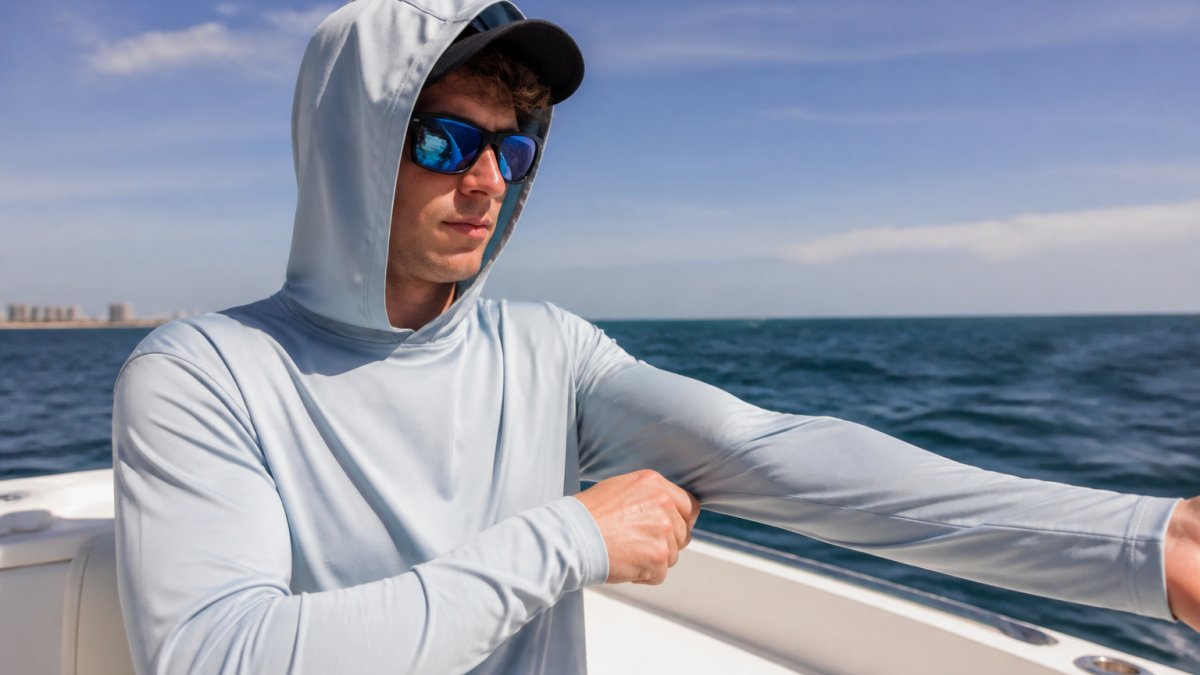
- Wear properly fitting UPF-rated clothing (a loose fit reduces protection through stretching and transparency)
- Choose synthetic or engineered UV-protective fabrics over cotton when possible
During water activities:
- Reapply sunscreen every 2 hours, even while wearing UPF clothing
- Reapply immediately after heavy water exposure or toweling off
- Seek shade during peak UV hours (10 AM to 4 PM)
- Wear a wide-brimmed hat and UV-blocking sunglasses
After water activities:
- Rinse your UPF garment in fresh water to remove salt or chlorine
- Air dry rather than machine dry when possible
- Hand wash or gentle machine wash in cold water without bleach
- Store in a cool, dry place away from prolonged direct sunlight
For ongoing protection:
- Replace heavily worn UPF garments every 2-3 years
- Monitor your skin and see a dermatologist annually if you spend significant time outdoors
- Note that fair skin requires more aggressive protection than darker skin types
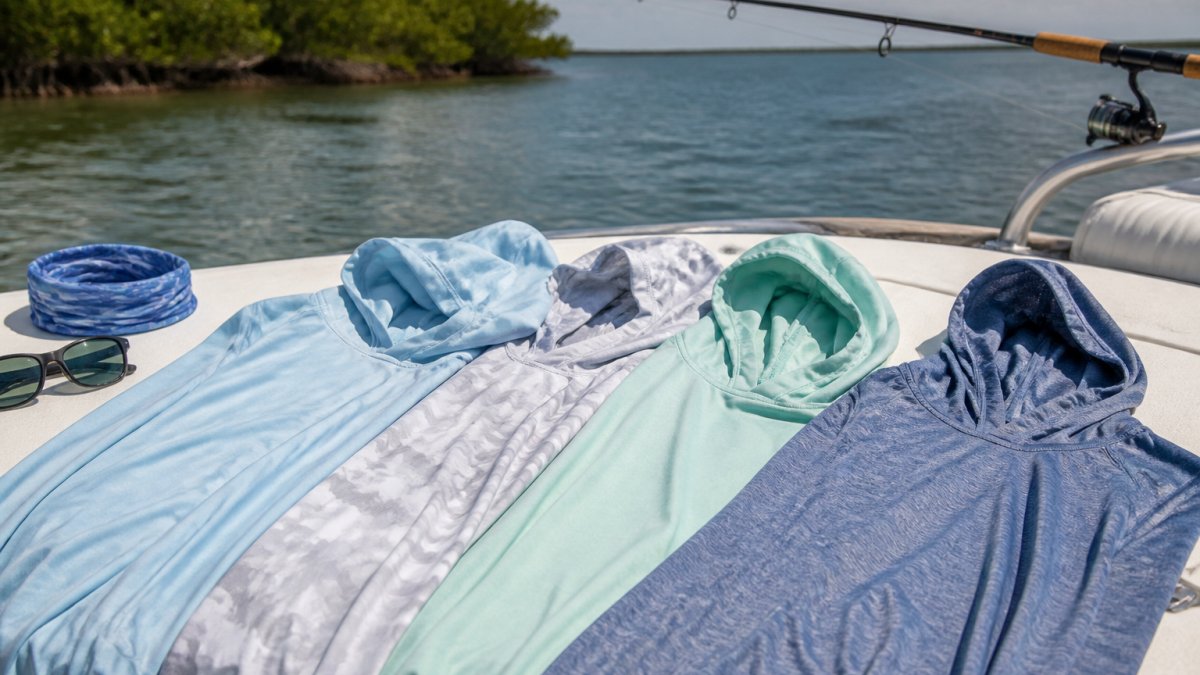
A quality UPF garment from Saltline Gear, like the Deep Atlantic Sun Hoodie or Whitecap Coastal Performance Sun Shirt, is designed to handle water exposure. Its lightweight, breathable polyester resists water absorption better than cotton.
No single solution is perfect: your UPF shirt loses effectiveness when wet, sunscreen washes off, hats blow away. The best approach layers multiple defenses and accepts that you must actively manage sun exposure.
Protecting your skin on the water takes more than a UPF shirt, you need clothing, sunscreen, timing, and smart shade choices. Saltline Gear's UPF 50+ sun hoodies and coastal performance shirts work best as part of a complete sun-safety routine. Shop all sun hoodies and commit to consistent sun protection habits that keep your skin safe for years to come.
Frequently Asked Questions
Does UPF clothing lose effectiveness when wet?
Yes, UPF clothing provides reduced protection when wet, but the reduction varies by fabric type. Synthetic fabrics like polyester typically lose 20-40% of their UV protection when saturated with water, while cotton loses more significantly. Importantly, wet UPF clothing still provides meaningful protection, a soaked UPF 50 shirt may perform closer to UPF 20-30, which is still substantial. Protection begins to recover as the fabric dries.
How long does UPF last in clothing after getting wet?
Protection typically begins recovering within 30-60 minutes of air drying, though this depends on fabric thickness, weave tightness, and environmental conditions like humidity and temperature. Thinner, tightly woven synthetic fabrics recover faster than heavier or loosely constructed materials. Direct sun exposure while drying can accelerate the process.
Is UPF clothing or sunscreen better for water protection?
UPF clothing and sunscreen work best together. UPF-rated garments provide consistent, long-lasting protection on covered areas and don't wash off in water like sunscreen does. However, sunscreen covers exposed skin your clothing doesn't reach. For water activities, wear UPF clothing (like a sun hoodie or sun shirt) as your primary barrier, apply water-resistant sunscreen to exposed areas, and reapply sunscreen every 2 hours or after toweling off.
Does UPF wash out of clothing with repeated use?
UPF protection in engineered fabrics is built into the fiber structure or applied as a permanent finish, so it doesn't wash out like surface treatments. However, repeated washing, bleaching, and wear can gradually reduce effectiveness over time. To preserve protection, hand wash your UPF garments when possible, avoid bleach, and follow care label instructions.

Leave a comment
This site is protected by hCaptcha and the hCaptcha Privacy Policy and Terms of Service apply.