
Article: How to Choose Breathable UPF Clothing
How to Choose Breathable UPF Clothing
Table of Contents
- Understanding UPF Ratings and Protection Levels
- Fabric Selection for Breathable UPF Clothing
- UPF Clothing for Hot Weather: Breathability and Airflow
- Moisture-Wicking Sun Shirts and Quick-Drying Performance
- Breathable UPF 50+ Shirts: Coverage, Fit, and Color
- Durability and Care: Maintaining UPF Protection
- Practical Comparison Framework for Garment Specs
- Frequently Asked Questions
Last Updated: October 7, 2026
Understanding UPF Ratings and Protection Levels
UPF ratings can feel like alphabet soup, but understanding what those numbers mean is the first step toward choosing breathable UPF clothing that keeps you safe without making you sweat through your shirt.
UPF stands for Ultraviolet Protection Factor. It measures how much UV radiation a fabric blocks: a UPF 50 shirt allows only 1/50th of the sun's UV rays through, UPF 30 lets through 1/30th.
UPF 50 blocks about 98% of UV radiation; UPF 30 blocks roughly 97%. The difference sounds small, but it adds up during long days on the water or golf course.
What UPF means and how UPF ratings work
UPF ratings test how fabric performs under controlled lab conditions: the fabric is exposed to UV light and scientists measure how much radiation passes through. That gives a baseline, but wet, stretched, and faded fabric all perform differently than lab-fresh material.
The UPF scale goes from 15 up to 50+. Anything below UPF 15 isn't considered sun-protective clothing. UPF 50+ means the fabric blocks 99%+ of UV rays, the maximum protection textiles can offer.
Choosing between UPF 30, UPF 50, and UPF 50+
Your choice depends on three factors: time outdoors, sun intensity, and skin sensitivity.
UPF 30 works for casual outdoor time, a quick beach walk, an afternoon at the park, or light water sports. It's often lighter and more breathable than higher ratings.
UPF 50 is the sweet spot for most water sports enthusiasts and outdoor workers. It handles full-day sun exposure without compromise.
UPF 50+ suits very fair skin, 8+ hours daily in intense sun, or life near the equator. It offers maximum protection but sometimes trades breathability for density.
Fabric Selection for Breathable UPF Clothing
The fabric you choose determines whether your sun shirt feels like protection or a penalty.
Tight weaves block more UV but trap heat; loose weaves breathe better but let more rays through. The trick is fabric that splits the difference, dense enough to protect, loose enough to let air move.
Fabric weight, weave, and density
Fabric weight is measured in GSM (grams per square meter). Lighter fabrics (under 150 GSM) breathe best but protect less; heavier fabrics (180+ GSM) protect better but hold heat.
The Deep Atlantic Coastal Performance Sun Shirt from Saltline Gear uses 180 GSM polyester. This weight sits in the sweet spot: heavy enough for solid UPF 50 protection, light enough that it won't feel suffocating in hot weather.

Weave density matters more than you might think. A tight weave blocks UV effectively but restricts airflow.
Material types: polyester, nylon, and cotton blends
Polyester dominates technical sun wear: naturally UV-resistant, quick-drying, and it handles repeated washing without losing its UPF rating. It's your best bet if breathability matters.
Nylon offers similar benefits to polyester but sometimes feels stiffer. It's durable and quick-drying, making it popular for water sports.
Cotton feels soft, but it loses UPF protection faster with washing and absorbs sweat instead of wicking it away. If you want breathable UPF clothing, avoid 100% cotton.
UPF Clothing for Hot Weather: Breathability and Airflow
Breathability is where most sun shirts fail. They protect you from the sun but cook you in the process.
Real breathability comes from three things: fabric choice, fit, and ventilation features.
Ventilation features and loose-fitting designs
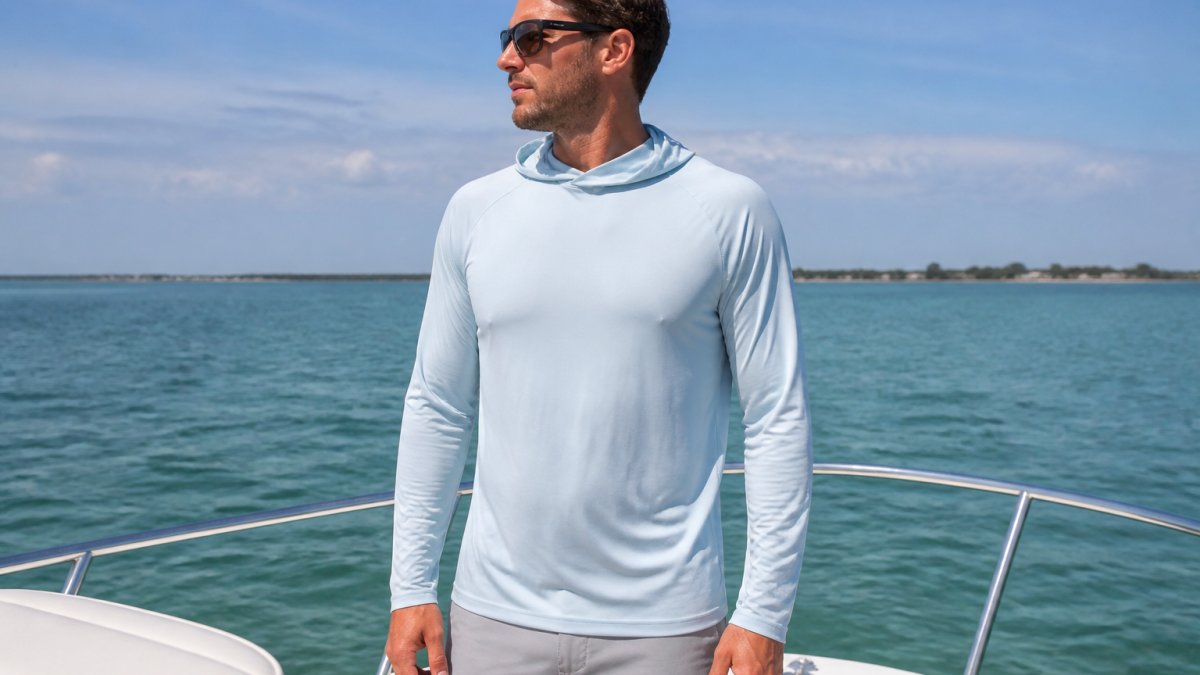
Loose-fitting cuts let air move around your body; a shirt that hugs your skin traps heat and sweat.
Ventilation panels, usually mesh inserts under the arms or along the sides, create airflow paths, and some designs add vents at the back or sides to let heat escape without sacrificing coverage.
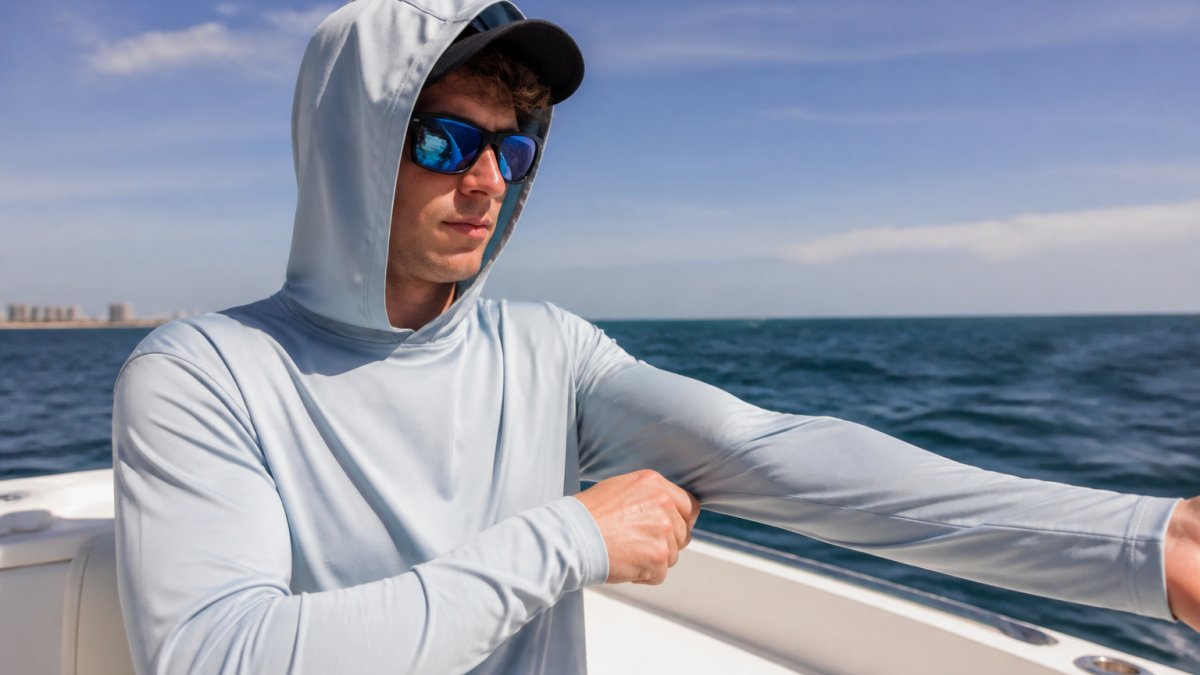
Hood design matters too. A hood that sits away from your head rather than clinging to your scalp reduces heat buildup. The Deep Atlantic Sun Hoodie from Saltline Gear features a design that provides coverage.

Testing airflow before you buy
You can't fully test airflow in a store, but you can check for clues. Hold the fabric up to light: if you can see through it, air will move through it; if it's opaque, the weave is tighter and airflow is restricted. Feel the fabric, it should be smooth and light, not stiff or heavy, since stiff fabrics usually mean tight weaves that trap heat. Check the seams: flat-lock seams create less friction and allow more airflow than standard seams, especially under the arms.
Moisture-Wicking Sun Shirts and Quick-Drying Performance
Sweat is your body's cooling system, but if it sits on your skin, you feel hot and uncomfortable. Moisture-wicking fabric pulls sweat away from your skin and spreads it across the fabric surface, where it evaporates faster.
How sweat-wicking fabric keeps you dry
Moisture-wicking works through fabric structure, not magic. Synthetic fibers like polyester push moisture away from the skin to the outer surface, where it meets air and evaporates.
The Coastal Performance Sun Shirts from Saltline Gear use sweat-wicking polyester. During a golf round or boat day, you'll notice the difference. Sweat moves away from your skin instead of pooling at your back.
Wicking also regulates temperature: as sweat evaporates, it cools your body through evaporative cooling, which is more effective than sweat sitting on your skin.
Quick-drying versus cotton: what matters on the water
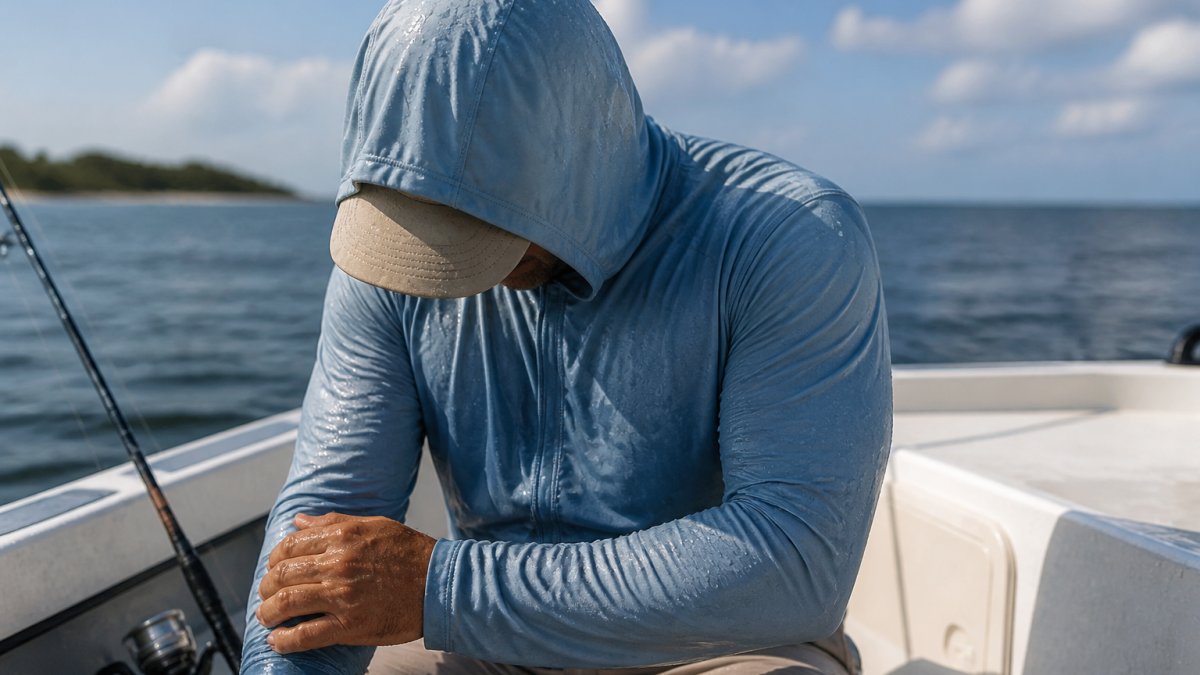
If you're boating or fishing, quick-drying is non-negotiable. Polyester and nylon dry in 1-2 hours; cotton can take 4-6 hours or longer. Quick-drying also means your shirt won't stay cold and clammy if you get splashed. This is where breathable UPF 50+ shirts shine, they dry fast and stay comfortable even when wet, while cotton sun shirts become heavy the moment they get damp.
Breathable UPF 50+ Shirts: Coverage, Fit, and Color
Protection isn't just about the fabric. Where the fabric covers and how it fits matter just as much.
Long sleeves, hoods, and collar protection
Your arms and neck get hammered by UV radiation, so long sleeves are non-negotiable for serious sun protection, they should extend to your wrists or close to them. Hoods add neck and face protection, covering your ears and the back of your neck where sunburns happen. Collar height matters too: a collar that comes up 2-3 inches protects your neck far better than a crew neck during hours on the water.
Fit and stretch for active outdoor pursuits
A sun shirt needs to move with you. Rigid fabric restricts movement and causes chafing, so look for 5-10% spandex mixed with polyester. Stretch fabric contours to your body without clinging, so golf swings and paddling strokes stay unrestricted. Seams should be flat and smooth, never digging into shoulders or underarms, raglan sleeves offer more freedom than traditional set-in sleeves.
Dark colors versus light colors for UV protection
This is where most people get it wrong. Dark colors absorb more UV radiation than light colors, but they also absorb more heat. Dark colors provide slightly better UV protection (maybe 1-2% more), while light colors keep you cooler by reflecting heat. For breathable UPF clothing in hot weather, light colors win, the cooling benefit outweighs the tiny protection difference, and you'll be more likely to actually wear your sun shirt. That said, if you're not sensitive to heat, dark colors like the Deep Atlantic shades offer marginally better protection.
Durability and Care: Maintaining UPF Protection
Your breathable UPF shirt loses protection over time. Washing, sun exposure, and wear all degrade the fabric's ability to block UV rays.
How washing and wear affect UPF ratings
Never bleach a sun shirt, the care label on Saltline Gear's products specifies no bleach for this reason.
Water resistance and sun exposure durability
Some sun shirts include water-resistant coatings that help the shirt shed water and dry quicker, at a slight cost to breathability. For boating and water sports, that trade-off is worth it, your shirt dries faster and feels less heavy when wet. Sun exposure itself also degrades fabric over time, since the UV rays the fabric blocks slowly break down the fibers; even the best sun shirts lose some protection after months of regular use in intense sun. Storing your shirt out of direct sunlight in a cool, dry place extends its lifespan.
Practical Comparison Framework for Garment Specs
When you're comparing sun shirts, use this checklist to evaluate options fairly.
| Specification | What to Check | Why It Matters |
|---|---|---|
| UPF Rating | UPF 30, 50, or 50+ | Higher = more protection, but may reduce breathability |
| Fabric Weight | Under 150 GSM vs. 180+ GSM | Lighter = more breathable; heavier = more durable |
| Fiber Type | Polyester, nylon, or blends | Synthetics outperform cotton for wicking and quick-drying |
| Weave Density | Tight vs. balanced | Balanced weaves protect without trapping heat |
| Fit | Loose vs. fitted | Loose-fitting allows airflow; fitted reduces chafing |
| Stretch | 0-5% vs. 5-10% | More stretch = better movement and comfort |
| Seams | Flat-lock vs. standard | Flat-lock reduces friction and heat buildup |
| Coverage | Collar height, sleeve length | Higher coverage = better protection but less airflow |
| Color | Dark vs. light | Dark = slightly better UV protection; light = cooler |
| Price | Budget vs. premium | Premium often means better durability and comfort |
Specification checklist: what to compare when shopping
Start with UPF rating, deciding between UPF 30, 50, or 50+ based on your sun exposure. Check fabric weight and fiber type, polyester or nylon at 150-180 GSM is the sweet spot for breathability and protection. Look at the fit: loose enough to move, fitted enough to stay in place. Examine the seams, since flat-lock seams are worth paying for. Consider color based on your climate: light colors for hot and humid conditions, dark colors for mild sun exposure.
Real-world performance across climates and activities
In tropical climates with intense sun, prioritize breathability: a lighter fabric (under 150 GSM) with loose fit and ventilation panels keeps you coolest, and UPF 30 in a breathable shirt beats UPF 50 in a sweat trap.
Choosing breathable UPF clothing comes down to matching fabric properties to your use case: the best shirt for boating isn't the best for golf, and the best for tropical travel isn't the best for temperate climates.
Saltline Gear's sun hoodies and crew shirts are designed for water sports and coastal living. Whether you're spending a day on the water or traveling to a sunny destination, our gear keeps you protected and comfortable. Shop all sun hoodies and find the right fit for your next adventure.
Frequently Asked Questions
What is the difference between UPF 30, UPF 50, and UPF 50+?
UPF ratings measure how much ultraviolet radiation a fabric blocks. UPF 30 blocks about 97% of UV rays, UPF 50 blocks 98%, and UPF 50+ blocks 99% or more. For water sports and extended sun exposure, UPF 50+ offers the strongest protection. The difference becomes meaningful during long hours outdoors, especially on reflective surfaces like water where UV intensity increases.
How do I know if a UPF shirt will actually stay breathable in hot weather?
Check the fabric weight (measured in GSM) and weave density. Lighter fabrics (around 150-180 GSM) with looser weaves allow more airflow than dense, heavy materials. Look for crew-neck or short-sleeved options with vented panels. Before buying, hold the fabric up to light to see how much passes through, and check product descriptions for moisture-wicking features. A breathable UPF 50+ shirt should feel lightweight and allow air circulation without feeling restrictive.
Do moisture-wicking sun shirts really keep you dry when swimming or boating?
Moisture-wicking fabrics pull sweat away from your skin and dry quickly, but they won't keep you completely dry if submerged. The benefit is that when you're sweating during activity, the fabric dries faster than cotton, reducing the clammy feeling. For boating and water sports, quick-drying polyester blends work better than cotton because they shed water and dry in minutes rather than hours, maintaining comfort throughout your day.
Does washing affect the UPF rating of sun-protective clothing?
UPF ratings can diminish with washing and wear, especially if garments are bleached or exposed to chlorine. Check the product care label and follow instructions to maintain durability. Avoiding bleach and harsh detergents helps keep the fabric structure intact, which supports the UPF performance over time.

Leave a comment
This site is protected by hCaptcha and the hCaptcha Privacy Policy and Terms of Service apply.